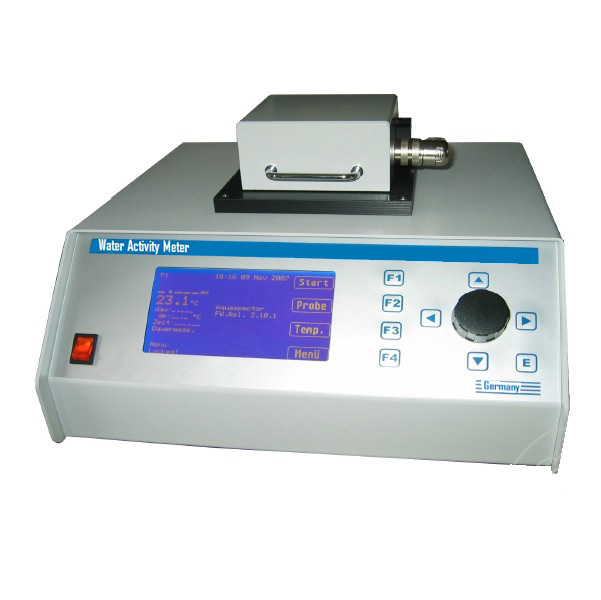
The Significance of Water Activity (aw) in Food
1. Definition
• Water activity (aw) is the ratio between the vapor pressure of water in a food product and the vapor pressure of pure water at the same temperature.
• Its value ranges from 0 (completely dry) to 1 (pure water).
2. Impact on Microorganisms
• Each group of microorganisms has a minimum aw threshold for growth:
o Bacteria: require aw ≥ 0.90
o Yeasts: aw ≥ 0.88
o Molds: aw ≥ 0.80
• Certain specialized microorganisms (halophilic, osmophilic) can grow at even lower levels.
3. Impact on Chemical and Enzymatic Reactions
• Many food deterioration reactions (lipid oxidation, Maillard reaction, enzymatic activity) are dependent on aw.
• Lower aw helps reduce reaction rates and extend shelf life.
4. Applications in Food Technology
• Preservation: Reduce aw by drying, adding sugar, or adding salt → prolongs product shelf life.
• Processing: Formulation of baked goods, jams, dried products, etc. is based on aw to balance microbial safety and sensory quality.
• Packaging: Packaging must control aw changes to maintain product quality.
5. Comparison with Moisture Content
• Moisture content only reflects the total amount of water.
• Water activity determines the “available” water that supports microbial growth and chemical reactions.
In summary: Water activity (aw) is a more critical parameter than moisture content in evaluating food stability and shelf life.