Summary of ASTM D1646
Purpose:
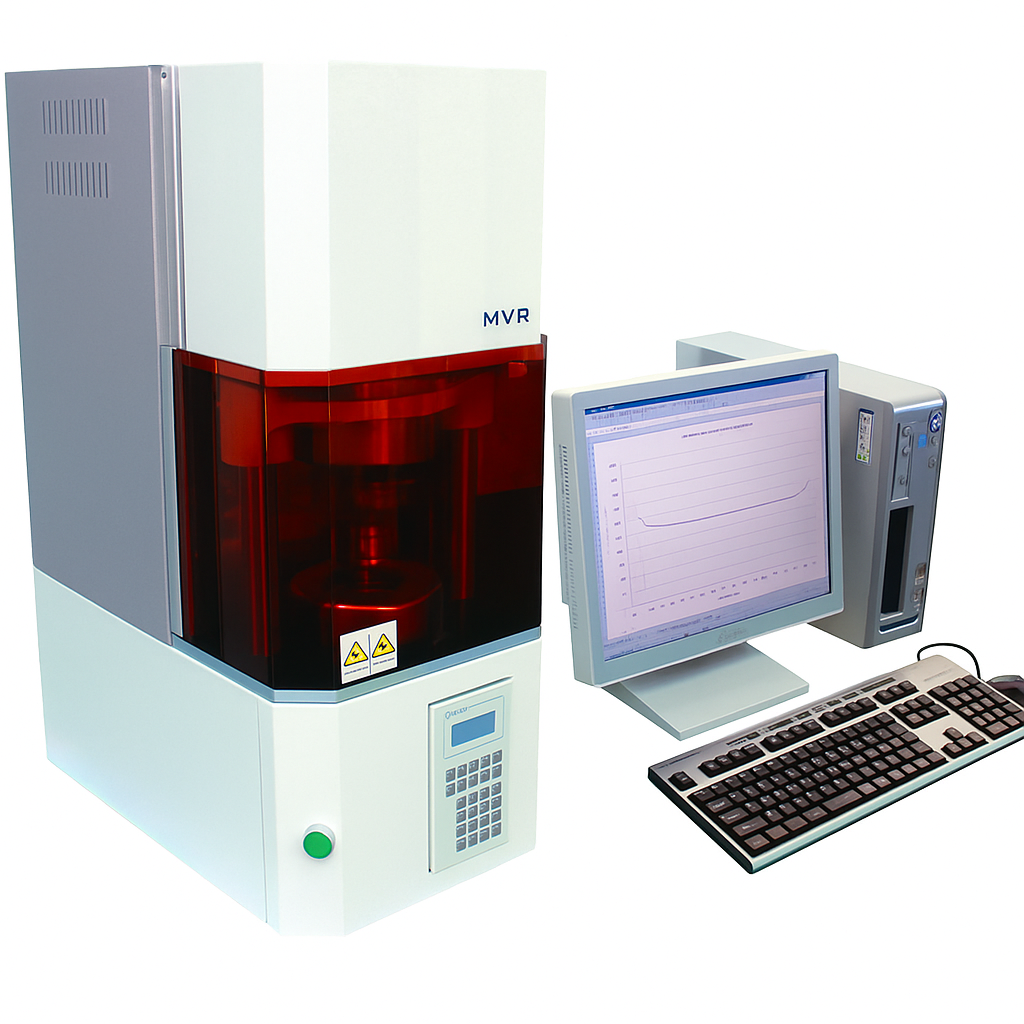
To determine the Mooney viscosity, scorch characteristics, and stress relaxation of unvulcanized rubber and rubber compounds using the Mooney Viscometer.
Principle:
• A rubber specimen is confined in a heated cavity with a rotor.
• The rotor rotates at a constant speed (typically 2 rpm).
• The torque resistance is measured and expressed in Mooney units (MU).
• The viscosity, scorch time, and relaxation characteristics are derived from the torque-time curve.
Key Test Parameters:
• Mooney Viscosity (ML 1+4, 100 °C):
o Measured after 1 minute of pre-heating and 4 minutes of rotor rotation at a specified temperature (commonly 100 °C).
• Scorch Time (t5, t35, t18, etc.):
o Time taken for torque to rise by 5, 18, or 35 Mooney units above the minimum value → indicates resistance to premature vulcanization.
• Stress Relaxation:
o The rate of torque decay after the rotor stops, giving information on polymer elasticity and structural response.
Applications:
• Quality control of raw rubber and rubber compounds.
• Comparing processability between different batches.
• Evaluating scorch safety and compound stability before vulcanization.
Advantages:
• Widely used, simple, and standardized method.
• Provides quick, reliable data on processing behavior.
In essence:
ASTM D1646 specifies the use of the Mooney Viscometer to measure viscosity, scorch time, and stress relaxation, which are critical indicators of the processing characteristics and stability of unvulcanized rubber.